 Sport
Sport Live in-Stadia
 Sponsors
 Events
 Brands
 Agencies
 Music
Music Contests
 Web Stories
 Prizes
 Qualifying bot
 Analytics
 Audience
 Fanzone
 Blocks
 Sponsors
 Promos flash
 Membership
 Catalog
 Templates
 Penalty 3D
 Basketball 3D
 Rugby 3D
 Baller 3D
 Roue 3D
 Pronostics
 Candy Crush
 Bubble Shooter
 Piano Game
 Full services
 Contact
 Test marketing
 Integrations
 Contact
 Blog
Blog Mobile-first Ebook
 Rules generator

How to turn your users into engaged players
Gamification isn’t reserved for video game giants. Even simple experiences can generate massive engagement.
According to the Casual Games Report H1 2025 by AppMagic, casual games generated $12 billion in in-app purchases during the first half of 2025, with Puzzle, Casino, and Simulation genres accounting for about 80% of revenues. This shows just how powerful clear, accessible mechanics can be at scale.
The real question isn’t “Does gamification work?” but “How can I adapt it to my product or service, even with limited resources?”
Make mechanics understandable from the very first second
The more intuitive it is, the more users will stick around.
Practical examples
- Onboarding: a 1-question quiz at signup that awards a welcome badge.
- E-commerce: a quick tap-to-reveal mini-game unlocking a small discount after adding an item to the cart.
- Media: a one-click poll at the end of an article to unlock an exclusive behind-the-scenes fact.
Why it works: users immediately know “what to do,” just like in a Match-3 game such as Candy Crush, where the “drag-and-match” action is instinctive. Obvious mechanics reduce friction and encourage that crucial first win.
Offer visible, rapid gratification
Immediate gratification is a powerful motivator.
Practical examples
- Forms: an animation and a “Well done!” message on submission, plus +10 points added to the user profile.
- Service app: a confetti animation and a points counter that increases in real time after every useful action (e.g., booking a slot, leaving a review).
- Marketing campaign: a 1-spin instant win celebrating a key action, similar to the reward mechanics in Coin Master that fuel curiosity and replay.
Create visible progression
Seeing “how far I’ve come” encourages users to finish what they’ve started.
Practical examples
- Profiles: a completion bar aiming for 100%, like on LinkedIn.
- Learning: a level-based journey (Beginner → Intermediate → Advanced) like Duolingo, with short, successive goals.
- Loyalty: tier systems (Bronze, Silver, Gold) achieved through small, meaningful actions.
AppMagic also highlights the rise of hybridcasual puzzles, where each puzzle completed unlocks resources to grow a persistent world (e.g., Gardenscapes, Evony). This mix of simplicity + depth keeps players engaged longer. In Q1 2025, hybridcasual titles showed strong momentum, with puzzles leading the top 10 by revenue (48%) and posting +67% YoY growth.
Integrate gamification into diverse user journeys
Gamification applies to many contexts.
Practical examples
- Retail / e-commerce: a “visit 3 times = reward” challenge with visible progress tracking in the user account.
- Events / sports: a quick prediction game at halftime, plus a “Fan of the Match” badge for those who participate three times in a row.
- Learning / onboarding: a lightning quiz between modules, followed by a certificate at the end of the journey.
FAQ – Simple questions about gamification
How can I start gamification without coding?
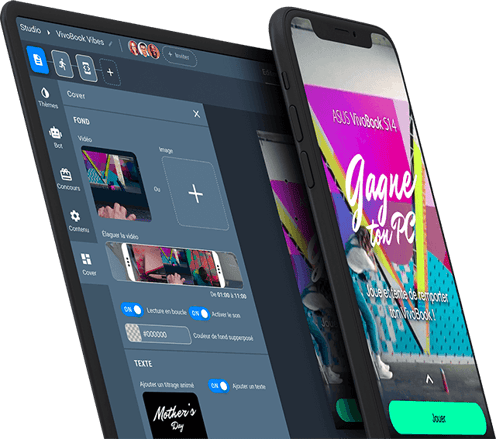
With Fastory.io, you can create mini-games, quizzes, and progress bars in just a few clicks using a visual editor. Perfect for quickly testing a simple mechanic on a landing page, onboarding flow, or campaign.
What simple mechanics quickly engage an audience?
Short quizzes, daily challenges, progress bars, and badges. For example: a 3-question quiz at the end of content, a 5-day streak with a small reward, or an “Explorer” badge after a first meaningful action.
Does gamification work in B2B?
Yes. In training (quizzes, levels), onboarding (checklists, progress), internal communication (tool adoption challenges), and even project management (milestones and celebrations).
What examples work for live sports events?
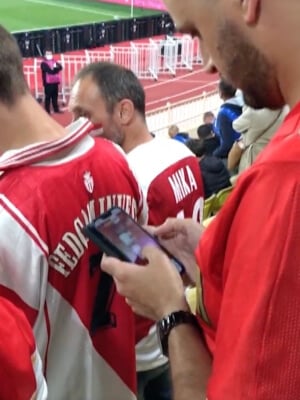
On Fanzone.me, you can launch a quick prediction during a break, display a live leaderboard, and award a “MVP of Predictions” badge to the top participants of the day.
How do I avoid the “gimmick” effect?
Link every mechanic to a clear business or learning goal: higher profile completions, more daily returns, better post-read conversions, improved retention in training.
What market data should I watch for inspiration?
AppMagic’s reports: the weight of casual genres (Puzzle/Casino/Simulation ≈ 80% of revenue) and hybridcasual growth (puzzles leading revenue share, strong YoY growth). These help you choose simple, repeatable mechanics over overly complex ones.
📚 Next level → Step-by-step gamification: How to apply trends
Learn how to easily apply the most effective mechanics to engage your users — even without technical expertise.
Sources cited
- AppMagic — Casual Games Report H1 2025: genre revenue share, $12B total, dominance of Puzzle/Casino/Simulation.
- AppMagic — Casual LiveOps Report H1 2025: genre breakdown in top 100 revenue, live events impact.
- GamerBraves (AppMagic data): +67% YoY growth in hybridcasual Q1 2025, 48% puzzle share in top 10 by revenue.